For spring break, our high-school junior son, Joe, and I visited five campuses in three cities. It was planes, trains & automobiles, with a dash of Uber.
What was the best part of your college campus visits?
Joe: Definitely talking to students. It takes some guts to approach a college student when you’re a high school student. But once you do it a couple of times, you realize they’re eager to talk with you and super helpful. I got to talk to the students at Kean University for like an hour while sitting in on a design class! That was awesome. Students are the most honest you can get because they’re not trying to sell you anything. They’re just telling you what it’s really like. A professor may tell you, “This class isn’t that hard.” While the students would say otherwise. What you really need is a student’s perspective on what it’s like to be a student there. That’s the perspective you need arguably more than any other.
What do you feel college campus visits offer that you can ONLY get in person?
Joe: You can read a brochure. You can go online. But you can never truly know what the place is like or how it feels until you get on campus. A campus visit gives you a sense of what it would be like to be a student there. It’s way easier to put yourself in the shoes of a student going there when you’re actually there.
What were your biggest surprises from your college campus visits?
Joe: Well for one, I was surprised that I didn’t like art schools. There’s nothing wrong with art schools. For some students, they’re perfect. For me, they’re not. I didn’t learn that from brochures and websites. I had to visit to experience how an art school differs from an Industrial Design program within a larger university.
I was also pleasantly surprised that my favorite schools weren’t the most expensive ones! Big relief! I admit that sometimes I do sort of equate big price tag with “good school”. But my dad always says, “It’s not about whether or not it’s a ‘good school’. It’s about whether or not it’s a good school FOR YOU.”
I didn’t expect to like Boston so much, but I really did. I didn’t expect Auburn to have as much connection to industry as they do. For my chosen field, that’s a big deal. I was biased going in, thinking that schools in big cities would be the only schools with solid connections to companies in Industrial Design. Now I know that industry connections don’t necessarily rely on proximity to a big city as much as on the program and their commitment to making connections happen for students.
What were your biggest a-ha moments from your college campus visits?
Joe: It put my mind at ease. I kept thinking I had to have all the skills going in. But at every school, they said that their job is to equip you to become an Industrial Designer. They don’t expect you to come in with all the answers. So, I was like, “Okay, yeah. I can do this.”
They kept reinforcing that they’ll teach you what you need to know. At Auburn, they kept saying, “You’ll be surprised how far you’ll come.” The seniors were saying, “Yeah, when I came into this program, I could barely draw.” Now they’re doing this big exciting work that’s really impressive. But when they started, they were just like me.
It was amazing and a relief to think, “I don’t need to know it all on Day One.” And that’s not just for ID. That’s for every program.
Now, I feel more confident. No, I don’t have the skills. Yet. But I have the potential to get them. I’m still the slab of marble that needs to be sculpted, but the sculpture’s in there. It just needs to be brought out.
What are some of your favorite go-to questions to ask when you’re visiting a college campus?
Joe: Okay, here are my biggies:
“What kind of student would you say this program is best suited for?”
“What do you do to prepare students for their line of work in this program?”
“How are you different or better than the other schools students most often consider when looking at this program?”
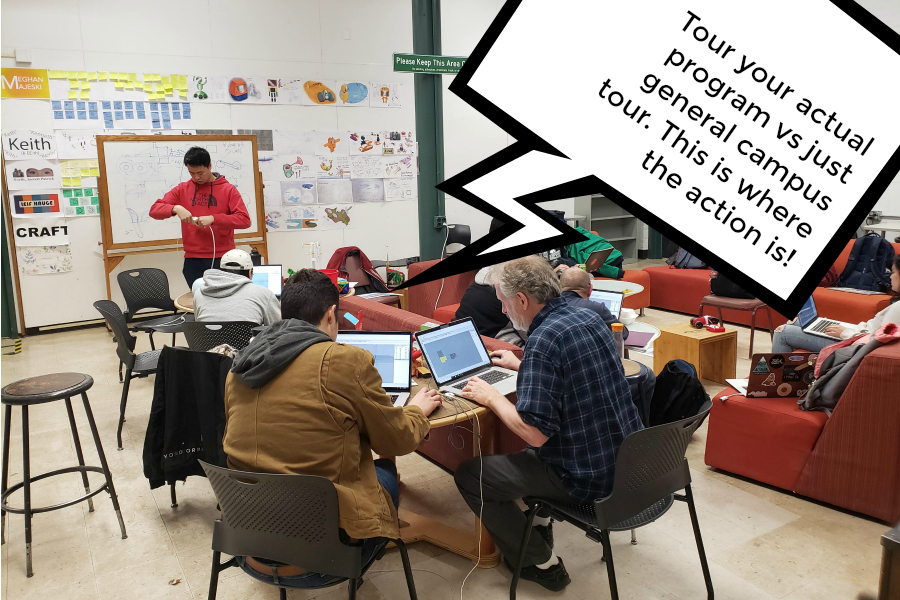
What’s the benefit of spending time within the actual program you’re considering, versus just taking the general campus tour?
Joe: Well, where will you spend most of your time and energy while at school, and why are you there? It’s not to go to a football game or hang out in a dorm. It’s to learn how to be a professional in your chosen field. So you have to spend time learning what that’s all about. For me, it’s all about the design program they have. You can have the prettiest campus in the world or the nicest people or the best dorms, and that won’t make or break your design program. Maybe they have an awesome rec center. Okay, great. But who cares, compared to whether the program you’re interested in is good? All this stuff? It’s all luxuries. A pretty campus doesn’t matter if the program sucks.
At Wentworth, the school seemed fine and all. But I wasn’t really wowed until we spent time in the Industrial Design program. When I saw what they were doing and how they were doing it and talked to students and professors and saw student work on the walls. Then I thought, “Yeah, this is a great option.”
The more you stay on the general campus tour route, the less you can tell the true differences between the different schools you’re considering. Spending time within the program you want to pursue gives you a much better idea of what your life would be like as a student there, day in, day out.
When do you think students should start visiting schools, and why?
Joe: I think students should start visiting schools as early as possible. Even if you’re uncertain about what you want to study, that’s why you should start early. Freshmen, sophomores. Or even earlier. You don’t want to be short on experience and knowledge of what your options are. If you start early, you can see firsthand, you can better solidify your decision about whether you want to do it or not. If you explore and you find out that’s NOT what you want to do, awesome! You found that out early.
Even if you don’t know what you want to do, get out there, get your mind on your future and what the possibilities are. It’s good to start thinking, start figuring out what you like and what you don’t like. College tours can help you better make that decision. If you get your mind on College, you’re going to be thinking the right way.
You’ll feel welcomed on the campus. Let’s face it, they will see you as a prospective customer, so they want you to visit their school! We’re all in the same boat here. They’ve been in the same shoes as you. The students will want to share the info with you. The faculty will want to share info with you. But I was glad that no one really puts any pressure on you. They do want you to make the right decision for you. Plus it’s really fun to visit schools and think about all the possibilities.
During my son Jack’s junior year of high school, the two of us took a trip to visit colleges. While we were in Boston, we walked the Freedom Trail, which is really great. I highly recommend it. What I don’t recommend is coming to the end of the trail at night, in the dark, miles from your hotel. And then both our phones died. And then it started raining. And then it started pouring. I suggested a cab. Jack insisted we walk, because how far could it be really? We’ll find our way. It must be just around this corner. Nope, we should have turned left back there. Any moment now. Any moment, the rain will ease up. Or something will look familiar. Or we’ll find someone who knows the way. Any moment now.
We were cold. We were drenched. We were hungry. I was crabby. Like red-faced F-bomb crabby. Still, Jack dismissed the idea of taking a cab. (Anyone else have a child who chooses the harder path, always?) We argued. But still we trudged on. What seemed like hours later, things started to look familiar once again, and we eventually arrived safely at our hotel.
Adversity Looks Like Victory, But Only In The Rearview Mirror
Now, when we look back on this memory, Jack doesn’t seem to remember the cold or the rain or the dark or the hunger or my crabbiness or the swearing. He says, “Remember that time when we were lost in Boston and I got us back to the hotel without a map or a cab?” What felt like adversity, defeat and misery at the time now looks like victory. Hindsight works like that.
But to be able to look back, you have to get through it. And the job of getting through it sucks sometimes. It really sucks.
One of my favorite podcasts is “How I Built This”. I’ve suggested to more than one friend that they tune in and have their rocky road child tune in, too. How I Built This features Guy Raz interviewing entrepreneurs who’ve made it. REALLY made it. Like Bobbi Brown of Bobbi Brown Cosmetics or Bob of Bob’s Red Mill or John Mackey of Whole Foods Market or Jake Carpenter of Burton Snowboards or Shark Tank’s Barbara Corcoran or Chicken Salad Chick’s Stacy Brown. If all you see is their photo in Forbes magazine, you see the easy life. It’s tempting to think they just knew all the right steps to take, or they figured out something I didn’t. Maybe they were smarter, luckier or more privileged. But almost without fail, these folks took a long, winding road. They trudged rocky, painful paths. Dropping out of high school. Dropping out of college. Not going to college in the first place. Being told you’ll never amount to anything. Being told you’re stupid, crazy or complete inept. Being the weird kid. Dealing with dyslexia. Overcoming addiction and depression. Having a marriage or an entire family fall apart. Losing a loved one. Having your factory burn to the ground. Going bankrupt and starting over again. Being asked to leave the company you started.
Real glamourous stuff. But they kept on going. They stuck to their rocky path. They shrugged suggestions that they should choose a more “practical”, “easier” path. They ignored the haters. They tried and failed, tried and failed and tried again.
To Students on a Rocky Road
Is your way forward really unclear, painful, bleak or completely hidden from view? Does it feel like everyone else got a how-to manual for life that you didn’t? Does it seem like every turn takes you further and further from what you think you want? Have hope.
When you look around, if all you see are bright, shiny people who seem to have everything figured out, there is one of three things happening: 1) You’re surrounded by the wrong people, 2) You don’t know those people as well as you think, or 3) You’re not seeing things clearly or completely. A fourth problem is perhaps that you’re spending too much time looking around at others, instead of focusing on what’s right for you and figuring out how to pursue it with all that you are.
In his college planning work with students at OnCampus College Planning, Tom has learned something really important. Everyone is going through something. EVERYONE. You may not always see it. And those bright and shiny kids who seem to have the world by the tail, 1500 Instagram followers and a date to the prom? Yup, they’re going through something, too.
Stay focused on your path, however rocky it may be. Keep moving forward, one baby step at a time. Be yourself. Fully yourself. Because that’s who you are wired to be. I love the line, “Be yourself, ‘cuz everyone else is already taken.”
Surround yourself with one or two truly authentic friends to whom you can speak your truth, and then hear and embrace their truth. If authentic friends are in short supply (‘cuz sometimes they are), talk to an adult who’s grown up enough to admit they don’t have it all figured out. Ask a counselor, family friend, Mom, Dad, youth group leader or coach this key question, “Hey, when you were my age, did you ever feel like things were just never, ever gonna work out?” I PROMISE YOU. They’ll be able to tell you a war story that will give you hope, make you laugh, shock you, or at least make you realize that you’re just like everybody else. You’re not alone. You’re just as confused, messed up and broken, AND you’re just as full of potential, beautiful and awesome as the rest of us. We’re all in the soup together.
To Parents On A Rocky Road
Moms and Dads, some of you (statistically speaking, most of you) have kids who are on a rocky road. I feel your pain. I have been there. We want smooth, pain-free journeys for our kids, with certain outcomes and bright futures. Sometimes we even short-circuit critical life lessons for our kids, in an effort to “put them back on the straight and narrow”, to “save them”. Once in a while that works. Usually it doesn’t. I have no quick tips or “3 easy steps” to deal with rocky road kids. There’s way more gray than black and white in that area.
I can only say there is hope. I’ve seen it. Some of my very favorite grown-ups had winding, rocky roads on their way to adulthood. Some of those paths were so rocky, those folks almost didn’t survive. But they did make it. The real gems in my life are the very people who were charred, broken bits of coal at one time who withstood the pressure, let adversity change them and emerged brilliantly from the wreckage. On their own timeline. In their own way. Once the lessons sunk in and their way forward was clear. And there was nothing anybody could have done to rush them along or change their course. They had to navigate the rocky road on their own, because that was the only path that led where they were ultimately supposed to end up.
The Road’s Still Rocky Sometimes, But I’m Stronger Now
I have wandered a rocky, meandering, sometimes really painful path. Now, looking back, I can see that I wouldn’t be the person I am today, nor would I have the precious, genuine friendships I have today had my path been all rainbows and kittens. Today, I wouldn’t trade my scars and bruises for anything, because I know they were the price I had to pay for the treasure I have now.
Today, I’m grateful. But at that time, I was miserable. I didn’t think I’d make it. And I would have given anything for smoother, more scenic travels.
Now when someone I love is on a rocky path that seems to be headed straight for disaster, or when I fall down and bang my head on another rock, I know that this, too, shall pass. It’s not easy. It hurts like hell. But maybe this path is the one they had to take, or I have to take, in order to get where I’m supposed to be. Maybe the smoother path doesn’t actually lead where I’m supposed to go, as alluring as it may be.
In the tough moments, I phone a friend who knows my mess and loves me anyway. I pray. I have a cup of tea, and I go to bed early. I listen to a podcast or read a story about someone who narrowly avoided disaster and lived to tell about it.
And I remember that rocky roads will get you there, too.
Photo Credits: Thank you to these talented photographers for their awesome images.
Adding a campus visit to your spring break travel plans can be fun and productive, even if you have never visited a college and college application time is a long way off. For those resisting already, let me address your objections, one by one:
There aren’t any colleges we’re interested in where we’re going (Even better! No pressure to make any big decisions then.)
My child is only in 7th (8th, 9th, 10th grade) (Perfect! It’s never too early to start exposing your child to the college environment to get their wheels turning and get them excited about their future.)
I’ll bet there aren’t any colleges where we’re going (“False.” Dwight Schrute)
We won’t have a car (Uber. Ever heard of it?)
My child won’t want to. (Yeah, I didn’t want to go to balmy rural Nebraska for spring break either. But no one asked me. They just said, “Get in the car, or I’ll really give you something to cry about.” Or something like that.)
We’re staying home (Great! Then you can check out colleges near your home. Perfect day trip.)
I don’t know what we’re doing for spring break yet (A college you’ve always been curious about could help you nail down a destination.)
Look, I can’t make you go on a campus visit. But I can tell you you’ll be glad if you do. It doesn’t have to take up your entire vacation. No matter where you’re going, you can add a campus visit that lasts a day, a morning or an hour.
Why You Should Start College Campus Visits Way Before Junior Year
As a college planner, I’m a huge advocate for visiting college campuses early and often, beginning in middle school and certainly well before junior year. Things are less overwhelming, more familiar and more comfortable the more you do them.
Wouldn’t you rather get your first college campus visits under your belt before you’re in the throes of college planning?
My sons have been taking campus visits since they were in elementary school. (Granted, I’m in the biz, and I’ve visited more than 130 campuses around the country.) Once Jack and Joe were juniors in high school and we were in the thick of college planning, the brilliance of early campus visits came to life for me. During campus visits for schools they were seriously considering, they already had a general understanding of what “College” was. They’d been on big campuses and small campuses. They’d seen private colleges and public colleges. They’d seen colleges in cities and colleges in small towns. The job of evaluating a particular school was much easier because they had something to compare it to.
Options for College Campus Visits That Fit Every Age and Interest Level
Schedule an official Campus Visit Tour.
Go to any college website, and you’ll find “Admissions”. There you’ll find info about visiting the campus. Colleges WANT you to visit, because they WANT to attract prospective students. They don’t care if you’re not applying soon. They love the exposure. Therefore, they make campus visit information easy to find. You can call or email the college to find out when they do tours, and then register for one that works for you. Campus tours typically take 2-3 hours and will give you a good idea of the highlights about that particular campus. Note: To get the most out of your visit, make sure they don’t have spring break at that time. The college website or admissions personnel can provide this information.
Take a Self-Guided Campus Visit.
While not as thorough as a guided tour, you can guide your own campus visit with a map of the campus that you grab from the visitor’s center or admissions office. College campuses are wide open, welcoming places, and you can walk freely all over campus on your own self-guided tour. You’ll get a good idea of what the campus feels like, what type of people are strolling around, what the facilities and amenities look like and more. A self-guided campus visit is a solid option for younger students who can’t be cajoled into an official tour. It also lets you control how long you spend visiting, so you can get back to other spring break activities on your own schedule.
Opt for a drive-by campus visit.
This is exactly what it sounds like. While you’re out and about exploring your spring break destination, drive through the college campus nearby. It’s obviously less thorough than a walking tour, but it accomplishes the goal of getting a feel for the campus. It doesn’t take long, and any campus visit is better than no campus visit.
Piggy-back a college campus visit on other site-seeing.
Just as State Street in Madison is right next to the University of Wisconsin, the best parts of many cities are right near college campuses. College campuses typically have fantastic art museums, wonderful theater productions, great athletic events, beautiful gardens and grounds and fun, quirky bookstores and coffee shops. Check them out!
For more on how to make the most of campus visits including what to ask, where to go, what NOT to do and who to talk to, download our free campus visit guide. It makes for great reading on the drive. We also have a Campus Visit Bullet Journal you can download. This handy one-pager is a helpful note-taking tool while you’re on a campus visit.
Are you conducting your college search to find the right fit? Recently, US News and World Report ran an article by a reporter named Josh Moody with helpful insights on liberal arts colleges. Read the article here. Below, I offer my perspective on the article, liberal arts colleges and types of colleges in general when it comes to your college search and finding the right fit for you.
Moody’s article is honestly one of the best I’ve read regarding liberal arts colleges and what they are, because it doesn’t pit liberal arts colleges (LACs) against big, public research universities in an either/or format. People should think of different types of higher education institutions in terms of a spectrum of choices that offer varying advantages and trade-offs.
I love the quote in the article from Jill Tiefenthaler, president of Colorado College (a liberal arts college), “I strongly believe that a student can get a great education anywhere if they are focused and mature and willing to really put in the effort. In the end, what you get out of your education probably depends more on you than the school that you go to.” In other words, when the student is ready, the teacher will appear. Let’s never forget the individual responsibility of the student in ultimately determining the quality of their education and what they do with the knowledge they’ve earned once they graduate.
The liberal arts education versus vocational education debate has been hot for the last few years as college costs have gone up, because consumers want to know “Will I get a job? What’s the ROI?” Those are fair questions. Liberal arts colleges point to places like Epic Systems that hire smart kids no matter what the degree, and there’s a lot to be said for that. But if you want to be an engineer or nurse, you can’t do those jobs with a broad understanding of many different subjects. You need technical proficiency. So one type of college versus another isn’t categorically right or wrong. It’s just a better or worse fit based on what you want your college experience to do for you.
Where I believe LACs overplay their hand is by claiming that “we teach you how to THINK CRITICALLY instead of just getting a job.” Implication? You can’t gain those skills elsewhere. Come on. My brother-in-law is a mechanical engineer. Do you honestly think that his mechanical engineering courses at Iowa State University didn’t teach him to think critically?
Why all the defensiveness among institutions of higher education? “This vs. that” debates ignore the uniqueness of one student’s college decisions based on the single, most important college planning factor: To what ends is college a means FOR YOU? As I tell students during my College Search work with them, “Get your #1 thing firmly in your mind, your college non-negotiable, and hold all possibilities up to that lens to find your best fit.” In other words, ask yourself, “If I get nothing else from my college investment of time and money, what’s the one thing I must get out of this?” Answering this question will improve your college search and help you find the right fit more easily.
We have designed a University of You discovery process dedicated to helping students identify their number-one college search criteria, as well as gain clarity about what type of student they are, where their passions lie, what their goals are and where they’ll best thrive. Ultimately, we use our process to assist students and families with their college search and help them find the right fit. To learn more, schedule a free consult anytime to talk about College Search. In fact, we wrote a blog post recently on the topic of what college search help is and how to tell if you need it.
There’s a quote from the article that I love, “This is a process that really starts with self-reflection and self-discovery.” I wholeheartedly agree.
If you’re a high school sophomore or junior embarking on your college planning process, I’d love to talk with you about your college search and how we might be able to help you find your best fit. I invite you to schedule a free consultation to learn more about our College Search services.
Stop! Before you read this, check out our new Campus Visit Bullet Journal, which you can download, print and use for campus visits. Okay, now resume reading. You’ll find instructions below.
We’re HUGE believers in the power of campus visits for your college planning process. OnCampus College Planning founder and campus visit proponent Tom Kleese says, “Any college visit is better than no college visit.” He urges students and families to visit campuses near your home, while on spring break, on a daytrip to your favorite city, wherever and whenever you’re able. Start visiting campuses long before you’re thinking about where you might want to attend college. Why? Because whether or not that school makes it onto your list of schools you consider attending, every campus visit teaches you something about College in general. Campus visits help you compare and contrast campuses and types of schools. You will make more informed decisions about schools that interest you if you have visited a few college campuses before you begin your college planning process.
We’ve heard students say, “Once I am accepted, then I’ll go visit.” If at all possible, visit college campuses as part of building your list of potential colleges, versus waiting until you’ve applied (and long before you’ve decided where you’re going to school).
We help students and families make the most of campus visits. The campus visit is the single-most important aspect of researching colleges. College websites are great. Phone calls to the admissions office are fine. Reaching out via email to professors is good. But nothing compares to the insights you gain from getting on campus.
We wrote a comprehensive 23-page Ebook called the Campus Visit How-To Handbook. It’s awesome. It’s effective. It contains a two-page Campus Visit Capture Tool at the end. But it’s lengthy. And it’s a bit overwhelming. We wanted to come up with something briefer and simpler.
A friend recently introduced me to the “bullet journal”. At first, I thought she made it up. She’s wicked creative that way. But it’s actually a thing! Do a Pinterest search for “bullet journal” and you’ll be hit with a barrage of bullet journal templates, hipster fonts and Martha Stewart-esque watercolor marker drawings specially designed for your bullet journal. Sooooooo extra. But the idea is actually really simple. Take brief “bulleted” notes to capture what you want to remember.
Our goal is to inspire you to action. Visit college campuses. If you aren’t sure where to start and need help finding your list of colleges to visit, check out our College Search services.
Get the most out of each visit. Our Campus Visit Bullet Journal condenses the info in our jam-packed campus visit e-book into one page you can print out and use when visiting campuses.
Ask questions not only of admissions representatives and tour guides, but also students you see around campus, professors and even your server at the restaurant. Jot brief notes on your campus visit bullet journal.
Here are three magic questions to ask students you encounter:
Why did you choose College X? (NOTE: Always try to use the name of
the college when asking questions instead of a more generic “this college” or “this school”.)
Do you mind if I ask what other colleges you considered, and what tipped the scales in favor of this college?
If you had a magic wand, what one thing about this college would you change?
Ask about campus hotspots and hangouts.
You can simply ask, “What are some of the best places to hang out on campus as a student?” Jot these down. Then check them out. Whether it’s the student union or a local coffee shop or burger joint, you’ll get a feel for this school’s unique hotspots. And you’ll probably catch a glimpse of what a “typical student” looks and acts like. Do they seem like people you’d like to surround yourself with? This is insight you won’t get from a phone call or email, or even the college website.
Connect with professors and staff in your area of interest.
There’s a huge difference between taking the general campus tour and investing the energy to spend time with the key contacts in your specific field of study. Not sure what you want to study yet? No problem. Pick something you’re interested in (business, math, art, healthcare, writing). At least three weeks before your campus visit, call that department and speak with the administrative assistant or program coordinator. Explain that you’ll be visiting and you’d like to meet with someone in that department while you’re there. The administrative assistant or program coordinator should know who to put you in touch with. During your meeting, ask them what a typical freshman course load looks like for someone in that field of study. Ask what kinds of careers people typically pursue with a degree in that field. Ask them what criteria or attributes they find make a successful student in that field. Whether or not you choose to pursue that field of study matters less than the insights you’re adding to your arsenal.
Eat twice: once on campus and once off campus.
No Olive Garden, McDonalds or Buffalo Wild Wings allowed. You get plenty of that at home. Most campuses will provide you with a voucher to eat free in the campus cafeteria, which is another great opportunity to check out the student vibe on campus, as well as the food. For off-campus eating, pick a local eaterie from among the hangouts and hotspots for a chance to do the same. It won’t surprise some of you to learn that checking out new restaurants is one of Tom’s favorite parts of the campus visit.
Show me the money. Ask questions about cost and merit aid.
This topic gives you another list of questions to ask of your tour guide and admissions personnel, as well as students you meet. Ask the admissions rep who gives the opening presentation about their key criteria for earning merit aid, whether it’s GPA, ACT score or other criteria. Ask about the average cost of on-campus housing and apartment rental. Ask about the quality of public transportation in the area or whether most students have a car on campus. These factors impact your estimated Cost of Attendance, which is critical as you learn about the cost of attending college in general, and compare and contrast this school with others.
Capture your thoughts.
Shedule downtime during your campus visit. It’s a good idea to take a break and process your thoughts. If you’re staying overnight as part of your visit, this can be at your hotel at the end of the day. Or you can simply find some quiet time at the local campus library or student union, grab a cup of coffee and jot a few notes on your bullet journal page. What do you like about this school? What concerns you, or what do you find disappointing? You can be brutally honest, since your campus visit bullet journal is for your eyes only. No one is going to judge your answers. There’s no right or wrong. Be honest about what you want, need, don’t want and don’t need in a college experience. It’s unique to you, and it’s for your own benefit.
Commit to next steps and a timeline.
Typically when you finish a campus visit, you’ll have amazing new insights, plus more questions. If this school is one you’d like to know more about, capture your next steps and commit to a timeline for achieving them. Perhaps the program coordinator or professor you spoke with mentioned the name of someone else in the department that can answer your questions. Jot that down and reach out soon via email or phone. Perhaps you became curious while on the tour about a student club or organization your tour guide mentioned. Maybe you didn’t have time to get to all the great hotspots and hangouts you learned about, and you want to check out their websites. Maybe you want to check out the school’s full course catalog or the graduation requirements for your field of interest and need to make a note to do that once you get home.
Take action. Schedule your next campus visit.
Are you a high school freshman who’s focused on a strong start to high school with no clue as to whether you want to attend college or where? Are you a sophomore who’s trying to balance a busy academic semester and the demands of several extracurricular activities? Are you a junior who’s just beginning to think about college planning? Are you a senior overwhelmed with the college application process? No matter who you are, your next campus visit is closer than you think.
Your high school considers a college visit to be an excused absence, which indicates the educational value they place on visiting college campuses. We agree. Talk to your family. Then schedule a day and visit a college right in your city. Or take a day trip to a college in a nearby city. Going out of town for the holidays? Take time now to see what schools are nearby and schedule a campus visit while you’re there. Schedule your next campus visit and put this Campus Visit Bullet Journal to work for you soon.


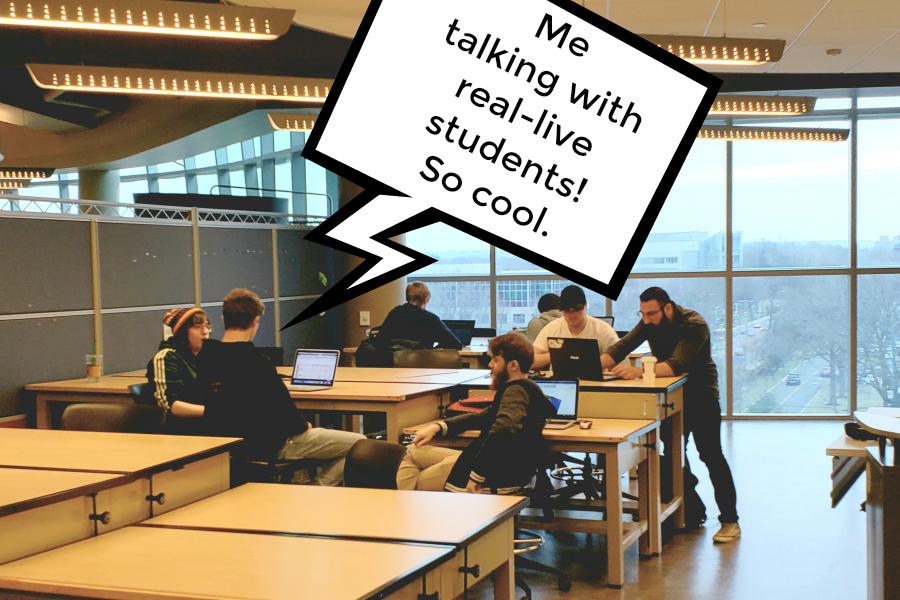 Joe: Definitely talking to students. It takes some guts to approach a college student when you’re a high school student. But once you do it a couple of times, you realize they’re eager to talk with you and super helpful. I got to talk to the students at Kean University for like an hour while sitting in on a design class! That was awesome. Students are the most honest you can get because they’re not trying to sell you anything. They’re just telling you what it’s really like. A professor may tell you, “This class isn’t that hard.” While the students would say otherwise. What you really need is a student’s perspective on what it’s like to be a student there. That’s the perspective you need arguably more than any other.
 Joe: Well for one, I was surprised that I didn’t like art schools. There’s nothing wrong with art schools. For some students, they’re perfect. For me, they’re not. I didn’t learn that from brochures and websites. I had to visit to experience how an art school differs from an Industrial Design program within a larger university.
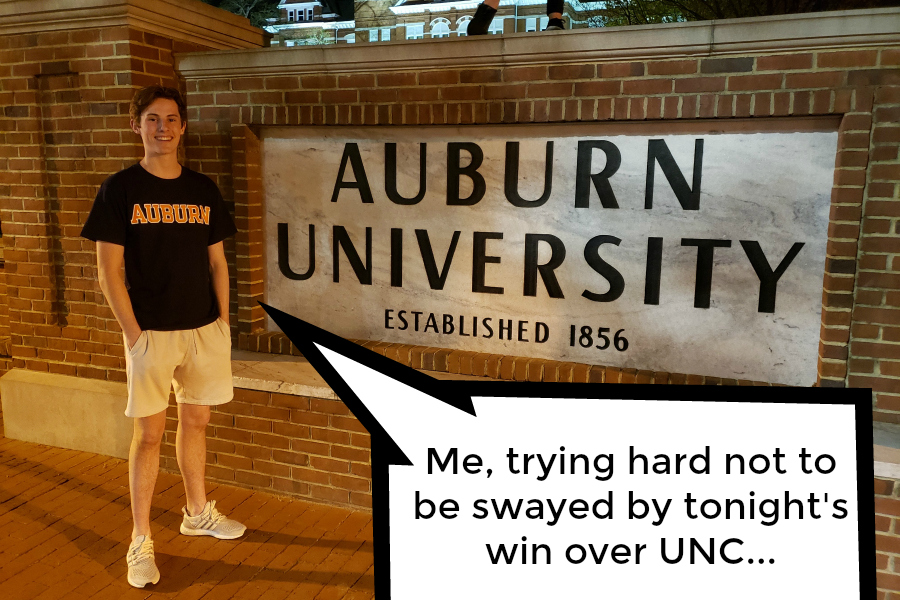 I didn’t expect to like Boston so much, but I really did. I didn’t expect Auburn to have as much connection to industry as they do. For my chosen field, that’s a big deal. I was biased going in, thinking that schools in big cities would be the only schools with solid connections to companies in Industrial Design. Now I know that industry connections don’t necessarily rely on proximity to a big city as much as on the program and their commitment to making connections happen for students.
 They kept reinforcing that they’ll teach you what you need to know. At Auburn, they kept saying, “You’ll be surprised how far you’ll come.” The seniors were saying, “Yeah, when I came into this program, I could barely draw.” Now they’re doing this big exciting work that’s really impressive. But when they started, they were just like me.
 What’s the benefit of spending time within the actual program you’re considering, versus just taking the general campus tour?
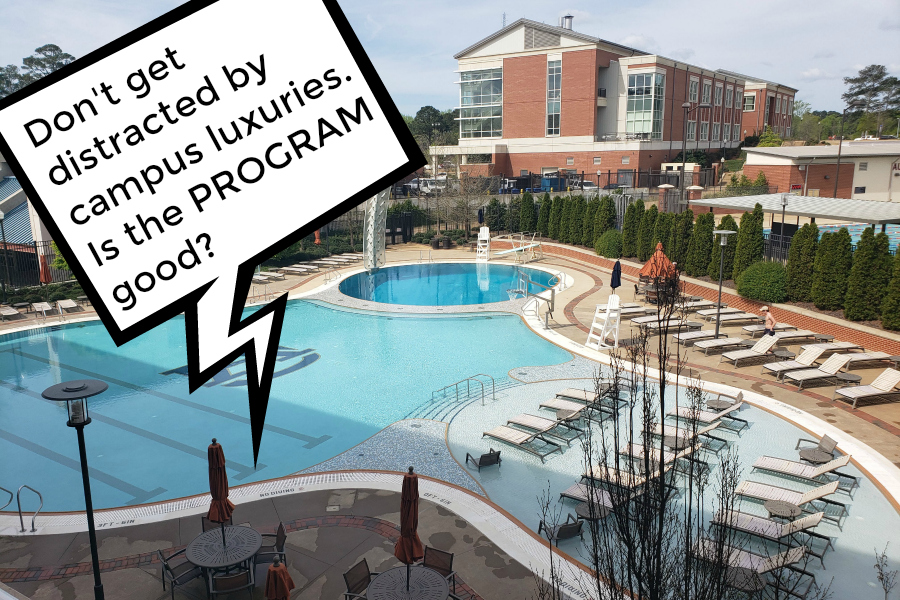 What’s the benefit of spending time within the actual program you’re considering, versus just taking the general campus tour?
 At Wentworth, the school seemed fine and all. But I wasn’t really wowed until we spent time in the Industrial Design program. When I saw what they were doing and how they were doing it and talked to students and professors and saw student work on the walls. Then I thought, “Yeah, this is a great option.”
 You’ll feel welcomed on the campus. Let’s face it, they will see you as a prospective customer, so they want you to visit their school! We’re all in the same boat here. They’ve been in the same shoes as you. The students will want to share the info with you. The faculty will want to share info with you. But I was glad that no one really puts any pressure on you. They do want you to make the right decision for you. Plus it’s really fun to visit schools and think about all the possibilities.
 Now, when we look back on this memory, Jack doesn’t seem to remember the cold or the rain or the dark or the hunger or my crabbiness or the swearing. He says, “Remember that time when we were lost in Boston and I got us back to the hotel without a map or a cab?” What felt like adversity, defeat and misery at the time now looks like victory. Hindsight works like that.
 Is your way forward really unclear, painful, bleak or completely hidden from view? Does it feel like everyone else got a how-to manual for life that you didn’t? Does it seem like every turn takes you further and further from what you think you want? Have hope.
 Surround yourself with one or two truly authentic friends to whom you can speak your truth, and then hear and embrace their truth. If authentic friends are in short supply (‘cuz sometimes they are), talk to an adult who’s grown up enough to admit they don’t have it all figured out. Ask a counselor, family friend, Mom, Dad, youth group leader or coach this key question, “Hey, when you were my age, did you ever feel like things were just never, ever gonna work out?” I PROMISE YOU. They’ll be able to tell you a war story that will give you hope, make you laugh, shock you, or at least make you realize that you’re just like everybody else. You’re not alone. You’re just as confused, messed up and broken, AND you’re just as full of potential, beautiful and awesome as the rest of us. We’re all in the soup together.
 I can only say there is hope. I’ve seen it. Some of my very favorite grown-ups had winding, rocky roads on their way to adulthood. Some of those paths were so rocky, those folks almost didn’t survive. But they did make it. The real gems in my life are the very people who were charred, broken bits of coal at one time who withstood the pressure, let adversity change them and emerged brilliantly from the wreckage. On their own timeline. In their own way. Once the lessons sunk in and their way forward was clear. And there was nothing anybody could have done to rush them along or change their course. They had to navigate the rocky road on their own, because that was the only path that led where they were ultimately supposed to end up.
 Now when someone I love is on a rocky path that seems to be headed straight for disaster, or when I fall down and bang my head on another rock, I know that this, too, shall pass. It’s not easy. It hurts like hell. But maybe this path is the one they had to take, or I have to take, in order to get where I’m supposed to be. Maybe the smoother path doesn’t actually lead where I’m supposed to go, as alluring as it may be.
 Look, I can’t make you go on a campus visit. But I can tell you you’ll be glad if you do. It doesn’t have to take up your entire vacation. No matter where you’re going, you can add a campus visit that lasts a day, a morning or an hour.
 Schedule an official Campus Visit Tour.
Recent Comments